

Built on Steel
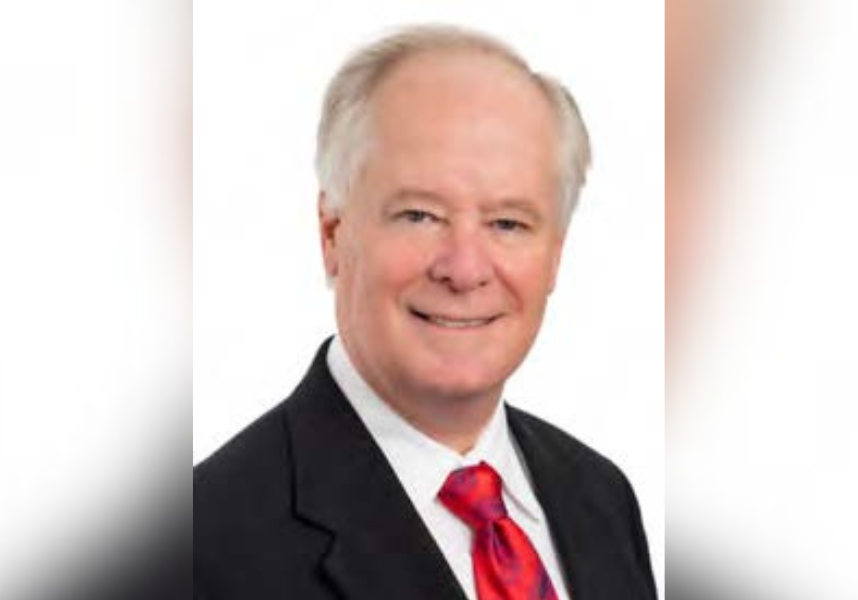
Mobile-headquartered Gulf States Engineering designs the facilities for the products needed in our modern society.
by Lindsay Mott Fletcher
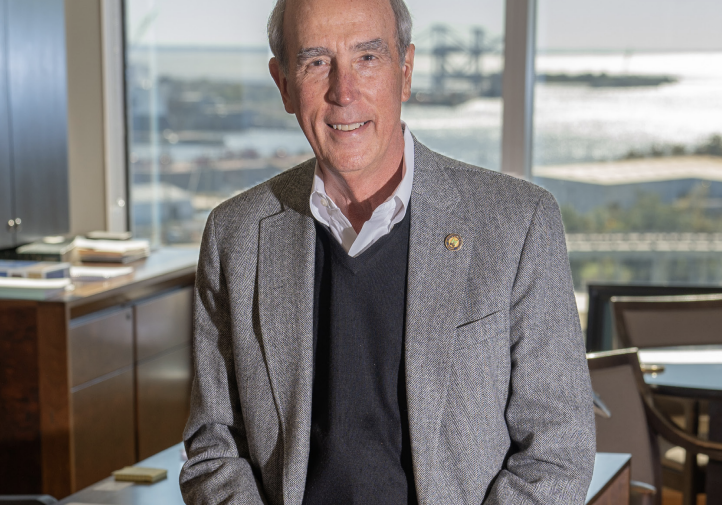
Founded in 1998, Gulf States Engineering, Inc. (GSE) is a full-service multidisciplinary engineering firm licensed in 40 states. Started and headquartered in Mobile, the company now has offices in Gulfport, Mississippi, and Nashville, Tennessee, and employs more than 100 people. “Mobile is a great community that is local to some of the most advanced steel manufacturing in the world,” said current President and CEO Tim Morris, PE, (TM) in discussing his background and the company with your author (LMF).
LMF: How did you get into this industry and come to be with GSE? What has been your career path with the company to become president/CEO?
TM: I’m originally from Pittsburgh, Pennsylvania, and got my engineering degree from the University of Dayton in Ohio. When I graduated in 1983, the unemployment rate in Pittsburgh was over 20%. Fortunately, I was offered a job with Martin Marietta Manned Space Systems in New Orleans to work in their Facilities Department in the manufacturing plant that made the external tank for the space shuttle. That is how I ended up in the Gulf South. While working for Martin Marietta, I took advantage of their education program that paid for me to get my MBA from Tulane University in New Orleans.
Working in a facility that made space flight hardware set the tone for the rest of my career. I knew I didn’t want to design commercial buildings and small structures. I left Martin Marietta and started with a heavy industrial consulting firm here in Mobile and have been here ever since. In 2001, I was working for a firm called Lockwood Greene managing their metals division and commuted to Pittsburgh. When they finally asked me to relocate to Pittsburgh, in February, I knew it was time to go out on my own. Fortunately, I met a gentleman named Robert Edens who had a similar background to mine and had already started a company named Gulf States Engineering, Inc. When I joined, I was the fifth employee and shared C-suite duties with Robert until his passing in 2006. Since that time, we have grown to more than 100 employees.
LMF: How would you describe the firm in just a few sentences?
TM: We design the facilities that make the products you need to live in a civilized society. The metals you need for buildings, cars, refrigerators; the chemicals you need for making plastics, medicines and fertilizers and fuel; and the manufactured goods you need to travel, launch satellites and cool/heat your home.
LMF: How would you describe the impact of the steel industry and GSE in the region through your clients, such as SSAB, ThyssenKrupp, AM/NS and more?
TM: I was fortunate to work with a gentleman who explored developing markets for British Steel. His insight was that industry developed around energy, transportation and metals. At the time, Mobile had the energy and transportation. It just needed metals. British Steel was actually the first steel company to come to Mobile. They relocated two Direct Reduced Iron plants to MacDuffie Island in the 1990s. These facilities made elemental iron for direct charging into electric arc furnaces. Soon thereafter, Ipsco (now SSAB) started their mill on Highway 43 and then ThyssenKrupp (now AM/NS and Outokumpu) in Calvert. These three mills represent different steel products that are used in shipbuilding, automotive and durable goods. This gives Alabama and the associated areas within easy driving distance access to just about any steel product you may need.
LMF: What are some of your more notable projects?
TM: In addition to our major metals projects around the U.S. and Mexico, I am especially proud of the work we have done for NASA in support of the Artemis single stage to orbit booster. In addition to designing the renovation of the Vertical Assembly building used to manufacture this booster, GSE also designed the final assembly area for the Artemis core stage booster.

LMF: What are the main changes you’ve seen the industry face over the years? What are some of the current biggest challenges facing the industry, and how is GSE overcoming them?
TM: I started my career more than 40 years ago. I worked on a drawing board with a straight edge and triangles, and some of the older engineers I learned from still used a slide rule. Over that time, I saw design tools such as CAD, computer finite element analysis and the integration of design/calculation software with drawing generation software. Now, we are building entire steel mills and refineries on the computer. We have virtual design reviews with clients all over the world using VR (virtual reality) glasses. It is way beyond me at this point.
Our major challenge for the last five years has been finding qualified people — and not just in Mobile but in all of our offices. As our society becomes more technology dependent, engineers and technical professionals become more valuable. As older engineers like me leave the field, it is increasingly difficult to find replacements.
Of the approximately 5.4 million engineers reported by U.S. Department of Labor statistics, only 495,000 are licensed. Therefore, the majority of engineers working in the U.S. are not licensed and, therefore, ineligible to work as a consulting engineers in responsible charge. To this end, GSE pays for advanced degrees, professional licensure classes and testing fees.
LMF: What trends do you anticipate shaping the future of the industry, and how is your company preparing to adapt?
TM: Technological advances in scanning, modeling, drawing generation and calculation integration continue. Being able to leverage all of these technologies is critical. All this technology is taught to our engineers after they graduate. That is why it takes five to 10 years to properly develop a young engineer for our industry.
LMF: Where do you see GSE in the next five to 10 years?
TM: GSE is a client-driven company. This means we work with our clients to define their needs and then provide technical solutions to their problems. We will continue to develop our skills in understanding our clients’ needs to produce better products more efficiently.

Read More


Subscribe to our weekly newsletter
Sign up here for free to get Bay Business News email newsletter every Friday.
By subscribing, you agree to our User Agreement and Privacy Policy & Cookie Statement.