

Chris Rainosek: Owner/Chef, The Noble South
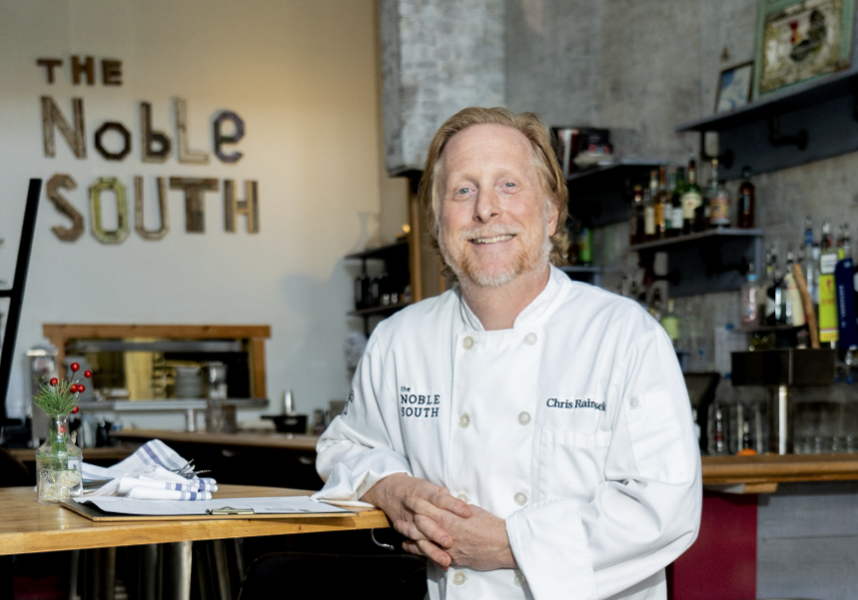
Running a restaurant that reflects its location and the people who grow local ingredients
by Lindsay Mott Fletcher
photography by Stephen Savage
Mobile native Chris Rainosek thought he might end up in a more traditional profession, but time spent in restaurants in Colorado changed his career trajectory since being in the kitchen felt like the right place for him. He returned to the Gulf Coast and opened his own place in Mobile more than a decade ago. Now, this venture to bring a menu focused on seasonal and locally produced ingredients has reached a level of recognition that many restaurants can only dream of: a MICHELIN distinction and a Bib Gourmand. For this issue, your author (LMF) was able to speak with Rainosek (CR) about this recognition and his and the restaurant’s journey to get here.

LMF: Tell me about your background and education.
CR: I’m a Mobile native, born and raised here, and a graduate of McGill-Toolen Catholic High School. Growing up in this area shaped a lot of who I am – the food culture, the sense of community and the way people gather around a table all made a lasting impression on me, even before I understood that food would eventually become my career.
After high school, I went on to the University of Alabama, where I earned a degree in political science. At that point, I imagined a very different path for myself. Like a lot of people in their 20s, I wasn’t entirely sure where I fit yet, but I thought I’d end up in a more traditional profession. Cooking wasn’t even on my radar as a career – it was something I enjoyed, but not something I imagined doing for a living.
After graduation, I moved to Colorado, and that move ended up changing the course of my life. I started working in restaurants there, and something clicked immediately. Being in the kitchen – the pace, the creativity, the camaraderie – felt natural in a way nothing else ever had. Colorado also exposed me to a different food culture, one that really emphasized ingredients, seasonality and technique. That experience opened my eyes to the craft of cooking in a way I hadn’t been exposed to before.
It wasn’t long before I knew I wanted to take the work seriously, so I enrolled in the Culinary School of the Rockies in Boulder. That decision set everything else into motion. Culinary school gave me the foundation and discipline I needed, but it also reinforced the instinct I already felt in my gut: that cooking was the work I was meant to do. From there, everything started to fall into place – returning to the Gulf Coast, working in kitchens back home and eventually building The Noble South around the values that first resonated with me in those early years.
LMF: Does The Noble South reflect the type of food/restaurant concept you had in mind once you decided to pursue your culinary career?
CR: The Noble South is very much the restaurant I hoped to build one day. The heart of it is simple: seasonal Southern cooking done with integrity and sourced directly from the farmers and producers who define our region.
LMF: How has your personal culinary style changed or grown over the years?
CR: Over time, my style has become more focused and more restrained. Early on, I wanted to try everything: different techniques, different directions. Now, the goal is clarity: letting great ingredients speak for themselves, honoring the traditions of Southern food while still evolving it. Working closely with local farmers has shaped that approach more than anything else.
LMF: Tell me a little about the history of The Noble South.
CR: We opened The Noble South in downtown Mobile more than a decade ago. Mobile was an easy choice – it’s home, and it’s a place with an incredibly rich food culture that deserved more representation in the broader culinary conversation.
Downtown made sense for what we wanted to build. It was the right setting for a restaurant rooted in Southern tradition but open to growth and new energy.

LMF: Can you describe The Noble South’s menu and culinary style?
CR: Our menu is seasonal, Southern and completely ingredient-driven. Everything begins with what our farmers are growing, harvesting and bringing to our back door. We work closely with small producers throughout Baldwin County, and those relationships shape the direction of our food more than anything else. When a farmer calls and tells us what is coming out of the ground or what is thriving in the fields, that is what guides the menu.
The Noble South is often described as farm to table, but for us it is not a marketing phrase. It is the foundation of how we cook and how we make decisions. The ingredients determine the dishes, not the other way around. When you build a menu this way, the food naturally reflects the seasons and the place we live. In the spring, you see peas, lettuces and soft herbs. In the summer, you see tomatoes, okra and sweet corn. In the colder months, you see heartier greens, root vegetables and preserved items we have put up earlier in the year. Our culinary style combines traditional Southern flavors with a lighter, more modern approach. The goal is to honor the ingredients and the heritage of this region while still giving guests something that feels fresh, thoughtful and grounded. It is simple food in many ways, but it is food made with intention and respect for the people who grow it.
LMF: What is most important for you?
CR: Integrity. That means respecting the ingredients, honoring the farmers who grow them and creating a kitchen culture built on consistency, care and respect. Our relationships with local producers are at the heart of what we do, whether it is the farmers we work with in Baldwin County, the fishermen who bring in fresh Gulf seafood or the small purveyors who keep us connected to what is happening season by season. If we get those things right, the food always follows.
LMF: How has the restaurant changed or grown since you opened?
CR: Over the years, The Noble South has grown into a restaurant with a clearer identity and a deeper sense of purpose. Our relationships with the farmers and producers who supply our food have become stronger and more collaborative, and those partnerships continue to shape the way we cook. We have refined our approach in the kitchen, built a team that believes in the work and created an environment where everyone understands why the ingredients matter and how they should be treated.
The restaurant has evolved as both the seasons and the region have changed. Our menu is more focused, our sourcing is more intentional and our connection to the community is more meaningful than when we first opened. Growth for us has never been about getting bigger. It has always been about becoming more rooted in who we are and the place we represent.
LMF: Has the local community been receptive?
CR: Absolutely. The support from Mobile has been incredible since day one. This community has always cared deeply about food, and I think people connect with a restaurant that reflects where we live and the people who grow our ingredients. Over the years, The Noble South has become part of the rhythm of daily life here. We see guests coming in for a quick lunch with friends, business meetings downtown, date nights, family dinners and celebrations of every kind. We have hosted birthdays, holiday gatherings and special events, and it means a lot to us that people choose the restaurant for moments big and small. That sense of being woven into the community is something I value just as much as any recognition we receive.
LMF: Can you speak to the evolution of the Gulf Coast dining scene during the years you’ve been here?
CR: The Gulf Coast dining scene has grown tremendously. There’s more talent, more ambition and more appreciation for quality ingredients than ever before. Restaurants across the region are telling their own local stories, and it’s exciting to be part of a moment where the broader culinary world is paying attention to what’s happening here.
LMF: How do you attract, retain and motivate high-caliber culinary talent in such a competitive industry?
CR: You attract and keep great talent by building a culture people genuinely want to be part of. That starts with respect, consistency and giving the team room to grow. I hold myself to the same standards I expect from everyone else, and I want people to feel ownership over the work they do. When cooks and servers take pride in the food and the experience we create, they stay and they invest themselves in the restaurant.
I am fortunate to have an incredibly dedicated team from the kitchen to the front of house. Their commitment is a huge part of why The Noble South has become what it is today. I am especially grateful for Chef Josh Lear, whose leadership and skill help set the tone in the kitchen, and for General Manager Marylyn Gafford, who plays a vital role in creating the level of hospitality we strive for every day.
LMF: Was earning a MICHELIN distinction always a goal for you?
CR: Michelin was never something I cooked for directly. I did not build dishes or shape the restaurant with the goal of earning any specific recognition. The focus has always been much simpler: do honest work, cook food that reflects where we live and stay true to the ingredients and the people who grow them. That has guided every menu and every decision we have made at The Noble South.
Being included in The MICHELIN Guide 2025 and receiving a Bib Gourmand are incredible honors. It is meaningful because it recognizes the work of our entire team and the farmers who support us. It also shines a light on the Gulf Coast and the food culture that exists here, which is something I am very proud of.
The recognition has not changed the way I cook, but it has reinforced the importance of the principles we built the restaurant on: Good ingredients, good technique, consistency and a team that cares about the craft will always matter more than anything else. If anything, the Bib Gourmand has reminded us that staying committed to those fundamentals is the best path forward.

rooted in Southern tradition but open to growth and new energy.
LMF: What does it really take to be selected for The MICHELIN Guide, and what does the Bib Gourmand distinction say about The Noble South?
CR: Being selected for The MICHELIN Guide and receiving a Bib Gourmand are about delivering great food, great value and a great experience every single day. For us, that has always meant more than the dishes themselves. It includes the atmosphere of the dining room, the warmth and professionalism of the service and the feeling guests have from the moment they walk through the door. We have been very intentional about creating a space that feels true to Mobile and true to the South, and our team works hard to make sure the hospitality matches the quality of the food.
We were the only restaurant in Mobile included in the 2025 guide and the only one recognized between Pensacola and Ocean Springs along the Gulf Coast. I believe what sets us apart is our commitment to local sourcing and the relationships we have built with farmers, but also the care we put into the overall experience. Our menu is tied to this region, and the environment and service are meant to reflect that same authenticity. My hope is that when people dine with us, they feel a real connection to this place, and I believe that is part of what MICHELIN saw in our work.
LMF: What leadership philosophies guide your kitchen operations, and how have they evolved?
CR: Lead by example. Stay calm, stay consistent and stay curious. Early in my career, I thought leadership was about having all the answers. Now I know it’s more about listening, teaching and creating an environment where people want to do their best work.
LMF: What financial risks were involved in pursuing MICHELIN recognition, and how did you navigate them?
CR: We never chased MICHELIN directly, so there wasn’t a strategic financial risk tied to the guide itself. Our risks have always been tied to our commitment to sourcing locally and cooking seasonally. Working with small farms can be more expensive and more unpredictable, but it’s central to who we are. The way we navigate that is by staying flexible, being thoughtful in menu planning and making decisions that honor the ingredients and support the people who grow them.
LMF: What’s next for The Noble South? Any immediate or long-term plans? What does success look like?
CR: Right now, our focus is on continuing to do what has always mattered most to us: serving food that reflects this region and taking care of the people who walk through our doors. The MICHELIN recognition is an incredible honor, but it does not change the fundamentals. We want to keep strengthening our relationships with local farmers, refining our menu each season and investing in the team that makes the restaurant what it is.
In the immediate future, we are looking at opportunities to enhance the guest experience and continue improving the systems and structure behind the scenes. Over the long term, success for us is not only about growth but about staying true to our identity. If The Noble South can continue to be a place where people celebrate, gather and feel connected to Gulf Coast ingredients, then we are doing our job.
Success looks like consistency, a strong team, a dining room full of people who feel at home and a restaurant that still reflects the values we opened with more than a decade ago. If we can keep that foundation strong, everything else will fall into place.

Read More



Subscribe to our weekly newsletter
Sign up here for free to get Bay Business News email newsletter every Friday.
By subscribing, you agree to our User Agreement and Privacy Policy & Cookie Statement.