
Threaded Fasteners, Inc.
President and CEO reveals how the local industrial fastener company continues to evolve, thrive and support industry.
by Kaija Wilkinson
From utility towers overlooking the prairies, forests and mountains of Alberta, Canada, to rollercoasters at Florida theme parks, Threaded Fasteners, Inc.’s (TFI) steel anchor and structural bolts are crucial components that hold these structures together. Founded in 1979 by brothers-in-law Frank Martin and Steve Sholtis in a small storefront on Eslava Street in downtown Mobile, Alabama, with only one chop saw and one rigid pipe threader, the company has, through “grit and resilience,” grown into a powerhouse in the North American industrial fasteners business, projected to grow from an estimated $20.70 billion in 2024 to 24.29 billion by 2029.[1] An Employee Stock Ownership Plan (ESOP) company with more than 350 employee-owners, TFI operates 22 facilities in nine states. TFI President and CEO Billy Duren (BD), who has been with the company since 1980, spoke with your author (KW) about the company’s values, strategy, evolution and what sets it apart from the competition.

KW: In a nutshell, tell me what TFI does and why it is important.
BD: TFI is a 100% employee-owned manufacturer and distributor of high-quality steel fasteners and building materials. Our mission is “to create value in and for the people we serve.” We provide fastener solutions from the ground up, including custom-made anchor bolts, domestic A325 structural bolts (heavy hex bolts made of medium carbon steel used for structural support in steel construction) and more. We house millions of dollars of inventory in warehouses throughout the U.S. to meet the global needs of our customers from industries including power utilities, chemical and electrical plants, commercial and marine construction facilities, stainless steel fabricators, metal building manufacturers and Department of Transportation fabricators. In addition to manufacturing, we offer boutique packaging solutions to complement our custom parts. Above all, we are a team of employee owners with a focus on creating value for our teams, customers and communities.
KW: The company serves a number of different industries. Which ones are the primary business drivers and how has that changed over the years?
BD: While we’ve been proud to serve many industries, the utility sector has been one of our biggest business drivers, especially as demand for domestic fasteners grows. Recently, we’ve also seen exciting growth in construction, metal building and steel fabrication. Along the Gulf Coast, marine construction has gained momentum, and across our branches nationwide, agricultural and OEM industries continue to thrive. Adapting to industry needs and offering unique and custom solutions to these industries keep us growing and evolving.

KW: Among the vast number of projects in which TFI has played a major supplier role, are there any that stand out?
BD: TFI takes great pride in every project we’re a part of. Without naming them, we are very proud to be involved in projects that have had a lasting impact. We provided fasteners for more than 70 miles of utility towers in Alberta, Canada, manufactured anchor bolts for plants in Southeast and Central Alabama and major capital projects for Florida theme parks.
KW: Tell me about the two founders’ professional backgrounds. Why did they launch TFI?
BD: Frank Martin and Steve Sholtis were brothers-in-law who saw a void in the market. Steve got his start in the tire business with Goodyear, while Frank started off in the fastener business. After years of managing stores and climbing the ranks, the men grew tired of corporate bureaucracy. In 1979 when their employer faced changes, they seized the moment and launched TFI in Mobile. From pulling orders to managing the warehouse, they wore every hat imaginable. Family and friends supported them through tough times, including Hurricane Frederic in 1979, which nearly destroyed their fledging business. They rebuilt with grit and resilience, hitting the road to connect with customers. Their legacy continues to create a lasting impact. In 2007, Frank kicked off our ESOP with his retirement, selling his shares to employees. Steve completed the transition in 2012, making us 100% employee-owned. Their impact on our TFI family will continue for generations.

KW: How has investing in manufacturing benefited TFI?
BD: A bolt is a bolt and a nut is a nut, but we believe people don’t choose TFI solely for what we sell. Customers do business with us because of who we are. We’re not just selling fasteners; we’re building relationships and creating value. We are a team of dedicated employee owners with a deep passion for servant leadership and a commitment to providing exceptional value in everything we do. Our team takes pride in delivering quality, dependability and exceptional customer service. Plus, our manufacturing team is dedicated to producing high-quality, domestic materials that meet the highest industry standards. Customers choose us because they trust our people, our products and our service.
KW: How many people did TFI employ originally and how many does it employ today? Is the company hiring?
BD: TFI started with the two brothers-in-law and slowly grew from there. Our longest-serving employee, Brett Matthews, joined in 1980, and I came onboard a few months later. Many of our team members have been with us for more than 20 years. We believe that is a testament to who we are. Today, our family of companies employs more than 350 individuals across various branches and companies. We are actively hiring high-quality candidates who align with our culture and values and seek lasting careers. Positions are available across multiple locations and service areas.
KW: What were the approximate physical sizes and capabilities of each of the previous locations: Eslava Street, Conception Street, St. Louis Street and Crichton?
BD: Our first location on Eslava Street was a small storefront, and we also borrowed a warehouse from Yarborough Machine. We had just one chop saw, one rigid pipe threader and one pallet of galvanized inventory. Through strategic moves and continued growth, we eventually expanded into the St. Louis Street campus, which is now home to organizations like the Innovation Portal and Precision Engineering. In 2014, we relocated our home office, national distribution center and Mobile branch from St. Louis Street to our current Crichton campus, which supports our continued growth. In 2023, we completed construction on a new distribution facility in Semmes, Alabama, marking another milestone in our expansion. Today, TFI operates 17 branch, manufacturing and operation locations, along with four subsidiaries, that bring additional capabilities to our team. Across all divisions and companies, we operate 22 facilities in nine states. Since 2011, we have completed nine acquisitions.
“Along the Gulf Coast, marine construction has gained momentum, and across our
branches nationwide, agricultural and OEM industries continue to thrive.”
KW: How did you come to join TFI? Did you help the transition to an ESOP company?
BD: My grandfather. I joined TFI in 1980 as a floor sweeper. Back then, I didn’t even know how to read a tape measure. My father taught me by drawing one on a poster board at night, and I’ve been invested in learning ever since. Over the years, I’ve worked in almost every role, from pulling orders to sales. Today, my primary focus is growing the future leaders of our organization. We have such a great team; it is an honor to serve alongside them. The ESOP transition is a testament to the vision of Frank and Steve. They saw an opportunity to pass their legacy on to the employees who helped build TFI. The decision has allowed many employee owners to build lasting wealth for themselves, their familiesand their communities.

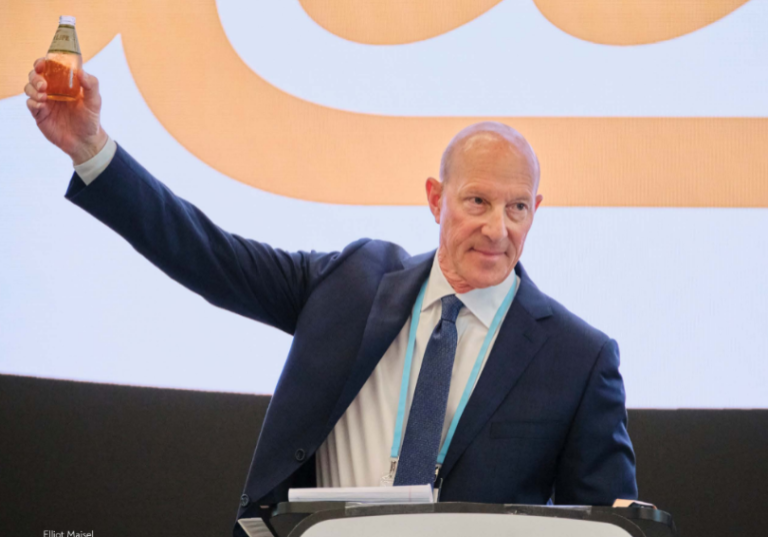
TFI President Billy Duren addresses attendees at the company’s 45th anniversary celebration.

TFI’s mission is “to create value in and for the people [they] serve.”
KW: Through the years, both organic and acquisition growth has been robust. What is the focus these days?
BD: We’re focused on smart growth, both organic and through acquisitions. We want to be better, not bigger. Our most recent moves include opening a new location in Tifton, Georgia, and expanding our Semmes facilities. Last year, we opened a new building in Semmes on 14 acres with plans for additional facilities, as we see our manufacturing capabilities continue to grow. Also in 2023, we acquired BBC Fasteners (of Alsip, Illinois), strengthening our manufacturing capabilities and expanding our domestic product offerings. We’re always looking for the right cultural fit for expansion, but above all, we want to ensure our growth supports our people and our customers. Our focus is on a scalable, sustainable and perpetual model for generations to come.
KW: What are TFI’s main challenges and how are they being addressed? Has business fully returned to normal post-pandemic?
BD: Like many companies, we faced significant challenges during the COVID-19 pandemic. As an essential business, we had to balance meeting our customers’ needs with ensuring the safety of our TFI family. Through it all, we stayed true to our mission to create value in and for the people we serve. This commitment continues to guide us in overcoming challenges and ensuring long-term success.
KW: What are some examples of new technology being implemented by TFI?
BD: We’re investing in new equipment, warehouse software and solutions for our VMI (vendor-managed inventory) customers to improve efficiency and service. Additionally, our “Nuts and Bolts of Leadership” podcast has become a platform to connect with our team and emerging leaders nationwide. Innovation at TFI isn’t just about machinery; it’s about creating value across all aspects of our business, so connecting technology with all aspects of our company is an essential part of our growth objective.
KW: What is TFI’s economic impact in Mobile and Baldwin counties?
BD: TFI proudly supports industries like construction and chemical production in Mobile and Baldwin counties. We are seeing tremendous growth within our local teams. As an employee-owned company, our most significant economic impact lies in helping our team members build lasting wealth and retirement benefits, as well as in the work of our community partners like Team Focus and Victory Health. We believe investing in our employees is investing in our community.
KW: Where do you see the company in 10 years?
BD: We’re in an exciting season of growth and expansion. Over the past 10 years, we’ve added more than 12 locations, and I believe that the next decade will be even more transformative. I see us continuing to grow strategically by adding locations, developing leaders and strengthening our culture. I often say we’re a leadership company that moonlights as a fastener company. Over the next 10 years, I see us continuing to invest in our people and communities while delivering on our mission to serve.
KW: What are examples of new technologies being implemented by TFI?
BD: In addition to our Tech Ops Team, which blends Technology with Operations, we are exploring and implementing AI tools into our operations and communication efforts. We recently introduced VAL, a virtual information assistant that can answer employee questions through our intranet system. These are some exciting days at TFI!
References
[1] Industrial Fastnerners Expo 2025, “North America Industrial Fasteners Growth Trends and Forecast,” Blog Post, March 12,, 2024
[2] a325bolts.com

Read More
Subscribe to our weekly newsletter
Sign up here for free to get Bay Business News email newsletter every Friday.
By subscribing, you agree to our User Agreement and Privacy Policy & Cookie Statement.