
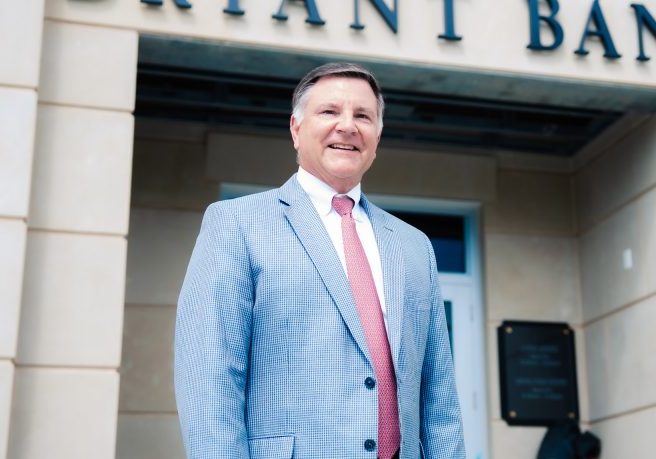
Ty Bullard: President and Dealer Principal, Joe Bullard Automotive Group
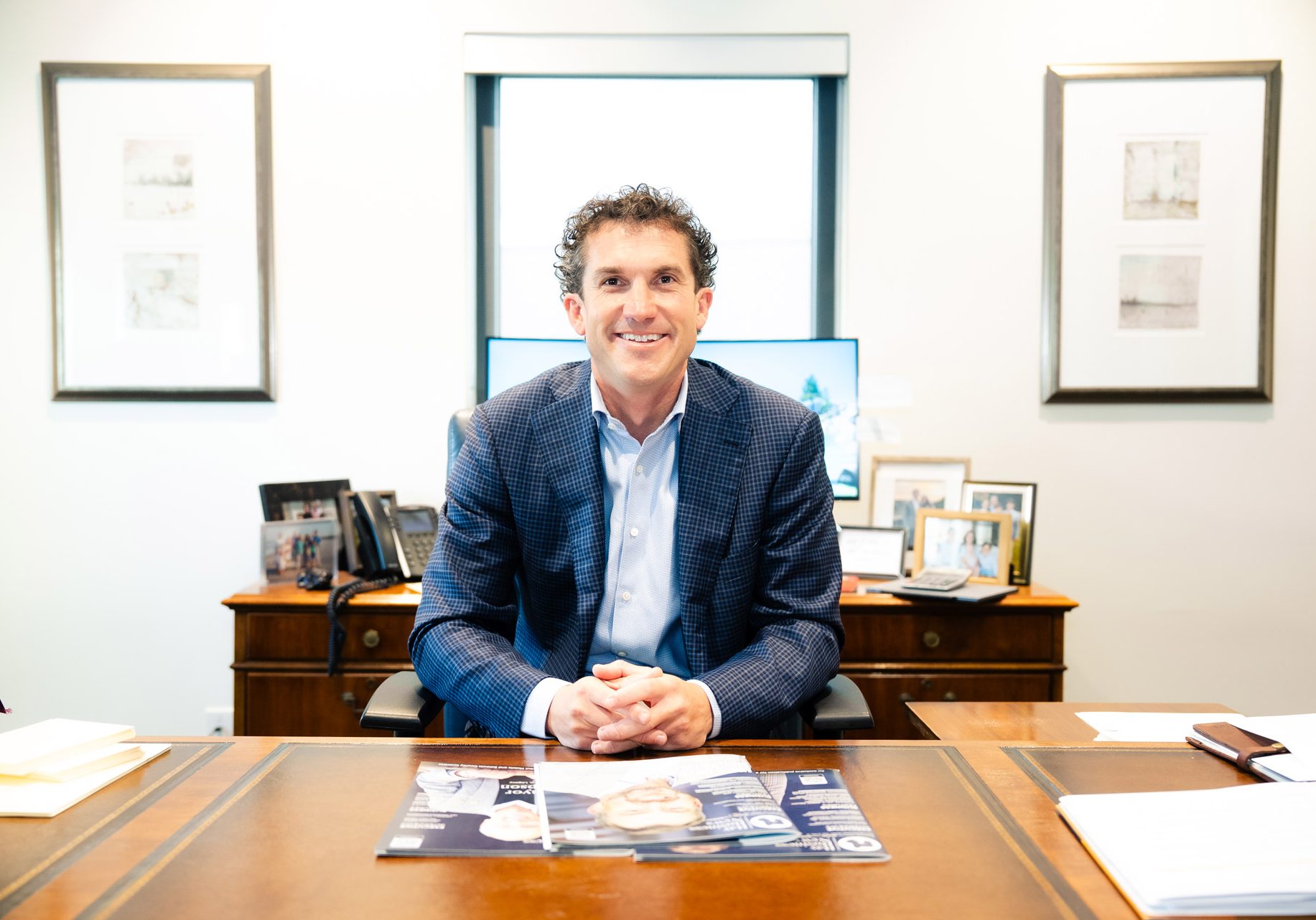
A discussion of family, faith and legacy
introduction by Lindsay Mott Fletcher
photography by Kevin Zhou
The Joe Bullard Automotive Group celebrated 70 years of business in Mobile in 2025, and as a family-owned business, Ty Bullard, president and dealer principal, is a third-generation leader of the automotive group from the Bullard family. The company now has six new car stores (five in Mobile and one in Grove Hill, Alabama) with a used car store in Pensacola and approximately 240 employees, some who have been with the company for many years.
A Mobile native, Bullard joined the family business after graduating from the University of Mississippi in 2006 and took the helm of the company in 2015 after his father retired. Bullard cherishes the father-son relationship the pair have, as well as their working relationship, and leaned on his father’s experience and knowledge to help steer this long-standing automotive business forward.
Bullard (TB) was gracious enough to sit down with your author (TBM) and discuss the history of the business and leadership insights, as well as the company’s current status and philanthropic efforts.
TBM: As a third-generation member of the Bullard family, did you know from a young age you would work in the family business?
TB: Deep, deep down the answer was always “yes,” because I felt I had some similarities to my father, and just looking at what I knew were some of my gifts, I knew this would make sense. It’s in my blood, but I didn’t like people predicting what I was going to do, so if you would have asked when I was 20 years old, I would have said, “I don’t know.”
I always had a vision of going outside the family business at first, moving to another city, getting experience somewhere else, but I had a child really early, so I needed to get to work. I did not do a fantastic job of creating extremely great opportunities for myself in college, so when my dad gave me the opportunity to come home and work in the family business, I took it.
Looking to the future, I have three sons, and if we’re still in business by the time they have the opportunity, my wife and I’ve always said we want them to go out and work for somebody else for at least a period of time and kind of cut their teeth that way.
TBM: How long did you work with your dad?
TB: Approximately 10 years. I came to work in 2006. We always laugh and say there can be only one Bullard in a building, or it would explode. But I reported to him for a couple years, and we navigated that pretty well. I purchased the majority of the business in 2015. In 2021, I purchased the rest of the business from him and he fully retired. I never wanted to lose the father-son relationship and be just business partners because, if we did that, we would have missed the whole thing.
TBM: How did your father get into the business?
TB: My uncle, my dad’s brother, was 12 years older than my dad. My dad was playing football at Tulane University, was drafted by the NFL and went for nine weeks of preseason. The Minnesota Vikings called, but my mom said she wasn’t moving to Minnesota, so he came back and started selling cars with my uncle. My uncle, Joe Dan Dunnam, was already working in the business; they went in and partnered and bought my grandfather out in 1980. My dad came into the business around 1972/1973. Then, my dad bought my uncle out in 1996. Right now, I’m the only family member involved.
TBM: You lead one of Mobile’s most recognizable family businesses. What are the biggest leadership lessons you’ve learned from carrying on the Bullard name?
TB: I appreciate being a well-known business or at least a name in the community people can trust or have learned to trust. I think that’s important.

I can’t ever ask anybody to do anything I haven’t done, so in the family business, I’ve tried to perform every role. That was always important to me. I knew if I put my head down and went to work and gained the respect of our employees, it would probably work out for me at the end of the day. That was something I was always taught: to give everybody the ultimate respect.
Around here, we say: “We do the right things because it’s the right thing to do.” We’ve grown our business on that. That’s who we are. If we do the right thing because it’s the right thing to do, at the end of the day we may go bankrupt and we may go out of business for it, but I can sleep at night. I can sleep at night knowing we went down fighting, and we went down doing the right thing. That gives me peace.

Anybody that walks on that lot you greet them with a smile, and you treat them all the same way because you just don’t ever know who you’re dealing with. It’s just the right way to be, and that’s something I’ve tried to pass on to my kids. Sometimes this business just teaches you that.
TBM: How do you honor your family’s legacy while putting your own stamp on the business?
TB: I don’t really think about honoring the family legacy, but I know it’s important that we exist, so I don’t want to ignore the fact. I always struggle with 70 years because I’m like, “We’ve got to earn our paycheck every day.” I don’t like to talk about it a lot, but I think from our family standpoint, this has been a platform for us that allows us to leave a legacy, and it’s all about stewarding what you’ve been given and connecting with people.
Our role is to support the community. We believe that’s important even from a spiritual sense; this has been the platform the Lord’s given us; it’s his. We’re just renting it from Him, and we’re just trying to be good stewards of it. Generosity is one of our core values. It’s important to us.
One of my goals as a leader: I want any of our employees to go to the store when they get off work with their uniform on and not want to take it off and be proud to wear it wherever they are outside of work. That’s something that’s important to me. So the way I carry myself, the way I operate, while I’m breathing, it’s important.
TBM: How’s the automotive business changed over the last decade or even since you started?
TB: It has changed, and it’s changing faster than ever now, especially with AI and all that’s coming. We still don’t know exactly how to use AI for our business; we’re “AI-ing” how to use AI.
The biggest change is obviously the digital world. I remember when we first got our website. At first, we asked, “Do you think we need one?” And then it was, “We can’t put prices on the internet. We’ll go out of business if we put pricing on the internet.” That was a huge change in our growth. It expanded our business like no other. Before the internet, our business was more localized. Now, we’re able to extend our reach without having to go buy more dealerships. We probably sell 60% of our cars locally, and I bet 30-40% are from outside of 50 miles. Now our brands cover bigger areas, so that’s natural, but that’s been a huge change.
Transparency has also entered our business, which is good. We needed more transparency because, if you look at car dealers, we’re not the most trusted people in the world. Transparency and the willingness to be transparent have separated some businesses from others. I think that’s something we’ve been willing to do. At the end of the day, people still buy from people. It’s still a relationship business.
That’s why I always say we’re in the people business. We just have to sell cars, right? To me, we haven’t forgotten, and that’s kind of where our gifting is, whether it’s customers or vendors or employees. I think seeking out that genuine relationship is what serves us well.
TBM: What advice would you give the next generation of entrepreneurs and family business leaders in our region?
TB: I think it’s important to go cut your teeth and work for good leaders outside of your family business. Work for people to really understand what needs to be in your toolbox when you have that opportunity.

I would say loyalty matters. Loyalty means something when it comes to whomever may grant you that next opportunity, so stick to something a little longer than maybe you feel like you need.
Know your people because that’s the value you bring. If they ever lose sight and think they’re not known, then you’re just another corporation. To me, from a family business standpoint, the value you create is somebody being able to call you. Sometimes, people put walls up. They may not know walls are up between them and their employees as they get busy. Fight like hell to keep those walls down and keep that approachability. An owner walking through the shop at a family business, that doesn’t happen at all companies because ownership’s not present. I have to remind myself presence matters. That’s the difference you have, and that’s what will sustain your workforce.
TBM: How would you describe the company culture?
TB: When I first started, I thought we needed to bring in all these people from the outside to grow, some outside views. You definitely need a balance of that, but what I learned really quickly is we have opportunities to grow from within because of the culture piece. So my goal is to develop leaders from within. That’s why one of our visions is to grow people. We’ve got to do that because it protects the culture piece.
TBM: How important is your personal sales ability?
TB: I think it’s vital. If I’m not bringing my A game, then they’re not going to bring their A game. They need to see that energy level, that hunger in me to grow and get better personally and professionally in whatever aspect that looks like. I think one of my benefits, one of the things that separates our business from others, is my accessibility. I tell them to put my cell phone number on the billboards. The faster you can get in touch with me, the better I can resolve the situation. The response time is critical. That comes with its own challenges and blessings, but you have to learn how to manage it.
TBM: You mentioned generosity above. Tell me how Joe Bullard is giving back to the community and its employees.
TB: It’s important for us to not only give back to the community with financial resources from a company standpoint, but we also believe it’s our job to steward our employees to give them a platform to be able to give back.
During COVID, we decided we were going to put others first so we created the Others First campaign, which started as a way to fill in the gaps. The gaps I saw in the community were the responses to small requests like someone needing a mattress or help with a power bill.
We created Others First and started giving. Every car we sell puts money into the program, and we sell Others First merchandise. Now, it’s become its own organization with a board of directors. It’s got its own money, and I bet since COVID, we’ve put probably $200,000 back into the community. We also looked at what are we doing internally to take care of our people, so probably 50% of Others First goes back to helping people within our organization.
TBM: If your grandfather were sitting across from you today, what would you want him to be most proud of?
TB: I was 2 years old when he died. I didn’t know him at a level to really understand his true desires, but from what I’ve gathered, I always heard he was tough but fair. I think he would be proud that we have been able to keep the culture that he knew he wanted. We’re a people company, and he maybe didn’t say it that way when he was in business, but I know he cared about people and giving them opportunities. I think the fact that we have kept that culture, going back to the “being known” aspect, I think he’d be proud of that. I think he’d be really proud of that. When you walk around this community, when you say his name and the name of his company, you see what people feel, and it’s genuine.

Read More



Subscribe to our weekly newsletter
Sign up here for free to get Bay Business News email newsletter every Friday.
By subscribing, you agree to our User Agreement and Privacy Policy & Cookie Statement.