

The Mobile Bay National Estuary Program
Turning science, partnerships and planning into smarter investments for Coastal Alabama
submitted by the Mobile Bay National Estuary Program
Coastal Alabama is experiencing unprecedented growth. Communities throughout the Mobile Bay watershed are seeing increasing demands on both traditional infrastructure and the natural systems that support our economy and quality of life.
Growth brings tremendous opportunity, but it also raises important questions. How do we support economic growth while maintaining the quality of life that attracts people and businesses to the coast? How do we prepare for future challenges while working with nature rather than against it? How can we make informed investments today that reduce risk and create lasting benefits tomorrow? Healthy coastal systems support tourism, fisheries, maritime commerce, recreation, real estate, public health and the quality of life that helps coastal Alabama attract residents, visitors, businesses and investment.
For more than 30 years, the Mobile Bay National Estuary Program (MBNEP) has helped communities answer those questions through science-based planning, technical assistance, regional partnerships and innovative approaches to complex coastal challenges. MBNEP brings together government agencies, businesses, scientists, resource managers, nonprofit organizations and community leaders to solve complex challenges and advance shared priorities for coastal Alabama. Today, MBNEP serves as a trusted source of science-based information for Alabama’s coast and estuaries while investing in environmental monitoring, watershed planning, restoration, local government capacity and citizen stewardship.
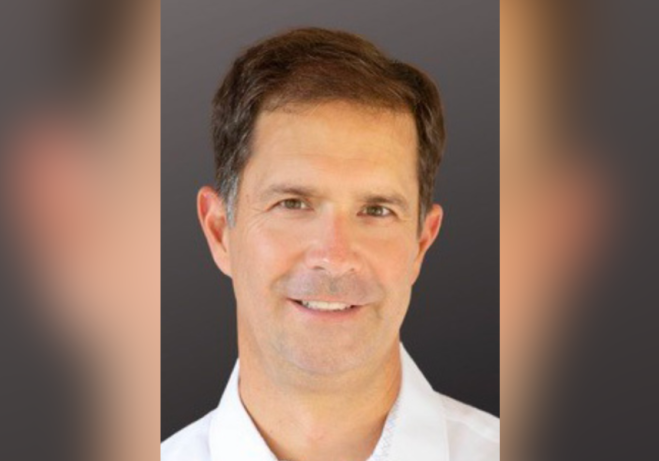
Mobile native Jason Kudulis became director of MBNEP in 2026 after nearly a decade with the organization and a career focused on conservation, watershed management and public service. As the program enters its next chapter, he sees MBNEP’s role as helping communities navigate complex challenges, build local capacity and sustain the natural resources and quality of life that make coastal Alabama special.
“I was born and raised in coastal Alabama, and even after spending time away, I found my way back home,” Kudulis said. “There’s something about this place that gets in your blood. Our waterways are part of what makes this region so special, and I’m grateful for the opportunity to serve the communities that depend on them.”
Building Capacity for Better Decisions

The Mobile Bay watershed covers approximately 65% of Alabama and portions of Mississippi, Georgia and Tennessee. Decisions made throughout this vast watershed ultimately influence the condition of Mobile Bay and the communities, businesses and industries that depend upon it.
MBNEP serves as a trusted regional partner, helping communities understand how watersheds function, how local decisions influence long-term outcomes and where investments can provide the greatest return. Much of the program’s value occurs long before construction begins. Through watershed planning, technical assistance, environmental monitoring, grant support, stakeholder engagement and project development, MBNEP helps communities identify priorities, develop solutions and compete for funding.
“Many people know us for restoration projects, but a significant part of our work happens before construction ever begins,” Kudulis said. “We convene the partners, expertise and resources needed to help communities identify priorities, address challenges and develop projects that can compete for funding and deliver long-term benefits.”
This work helps communities and partners move from reacting to challenges toward proactively planning for the future, making smarter investments and achieving better long-term outcomes.
Understanding Where We Stand
In 2025, MBNEP released the State of Alabama’s Estuaries and Coast, the first comprehensive assessment of coastal conditions since 2008. The report synthesizes long-term monitoring, habitat assessments, shoreline analyses and water quality data to provide a science-based evaluation of the health and condition of Alabama’s estuaries and coast.
Simply put, the report tells us where we stand. Healthy estuaries support fisheries, tourism, ports, recreation, property values, public health and economic activity. Understanding current conditions helps communities make more informed decisions about future investments and priorities.

Planning for Where We Are Going
Building on the findings of the State of Alabama’s Estuaries and Coast report, MBNEP recently completed its new Comprehensive Conservation and Management Plan, “The Waters We Share.”
If the State of Alabama’s Estuaries and Coast tells us where we stand, The Waters We Share tells us where we are going.
The plan provides a roadmap for the next decade and focuses on four interconnected areas:
- Understanding estuary status and trends
- Restoring and protecting natural systems
- Strengthening technical assistance and local capacity
- Expanding education and public engagement
Together, these priorities provide a framework for turning science into action and planning into measurable results. “They help us align science, planning, partnerships and action around a common vision for the future of coastal Alabama,” Kudulis said.
Natural Systems Are Infrastructure
One of the most important lessons learned through decades of watershed planning is that natural systems function as infrastructure.

Coastal Alabama depends on both built infrastructure and natural infrastructure. Roads, bridges, drainage systems, wetlands, marshes, floodplains and shorelines all work together to reduce risk and support economic activity.
Wetlands store floodwaters. Marshes help stabilize shorelines. Streams and floodplains convey and filter water. Healthy estuarine systems support fisheries, recreation, tourism and quality of life. When functioning properly, these systems provide services that would otherwise require costly engineered solutions.
“We often think about infrastructure as roads, bridges and drainage systems, but wetlands, marshes and floodplains are infrastructure, too,” Kudulis said. “When those systems function properly, they reduce flooding, improve water quality and help protect communities from costly impacts.”
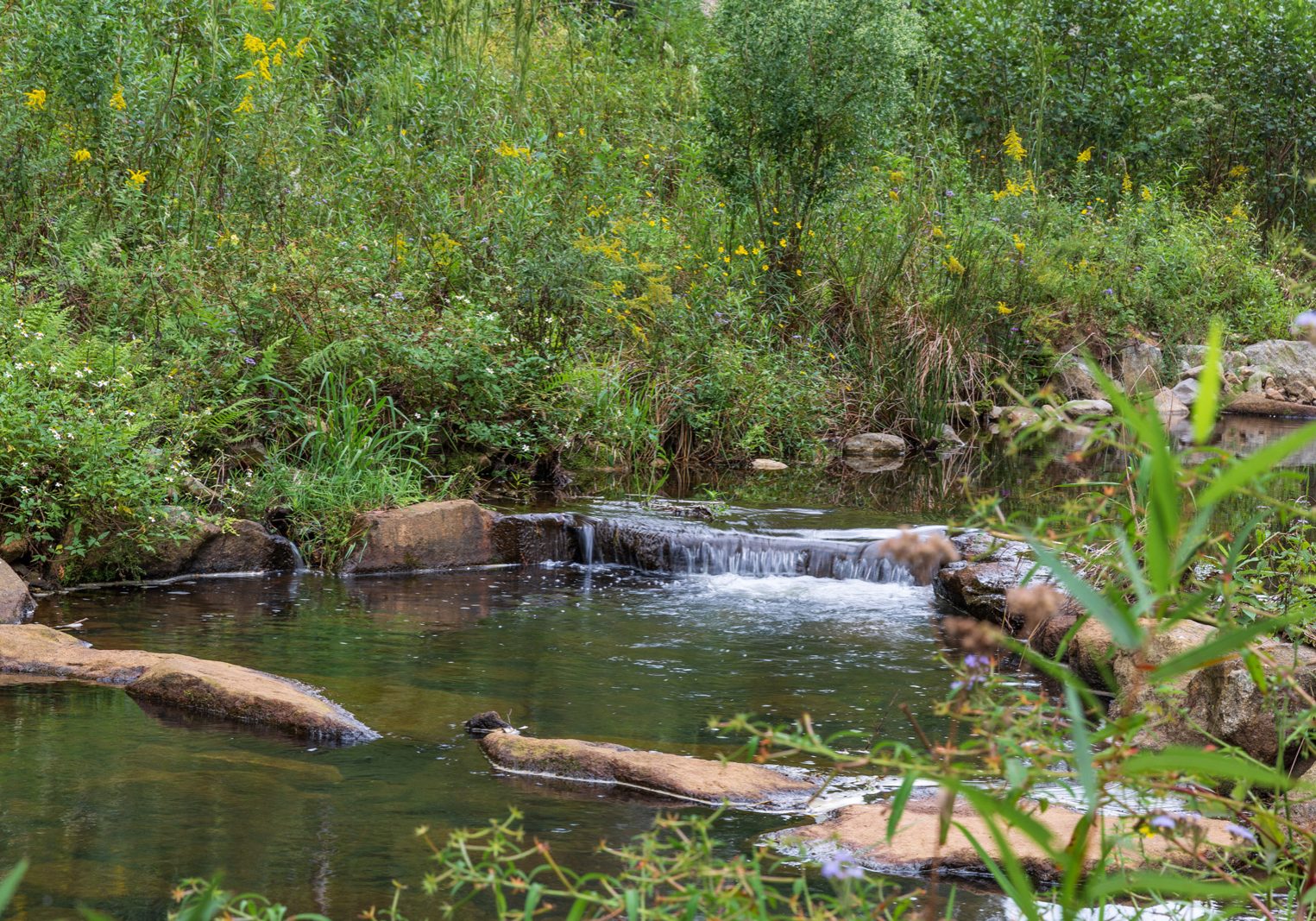
This approach shows how long-term planning becomes practical implementation, moving from data and coordination to projects that reduce risk, restore habitat and improve downstream conditions. In the D’Olive watershed, where excessive erosion and sedimentation have affected streams and downstream waters for decades, MBNEP and its partners have helped restore nearly 3 miles of streambed while reducing the movement of sediment, nitrogen and phosphorus through the watershed. In Mobile County, the Deer River marsh system shows how natural infrastructure can be strengthened at scale. Through thin-layer sediment placement and related restoration work, MBNEP is helping create and enhance more than 100 acres of tidal marsh across Deer River and the Dauphin Island Causeway. In Fowl River, MBNEP is advancing nature-based shoreline solutions that address erosion while maintaining habitat and ecological function.

These projects demonstrate how science, planning, partnerships and innovative solutions can help communities address complex challenges while creating long-term environmental, economic and community benefits.
Investing in Resilience
Resilience is often discussed in environmental terms, but it is equally an economic strategy. Flooding, drainage challenges, shoreline loss and water quality impairments affect businesses, infrastructure, property values and community competitiveness.
Effective planning helps communities avoid costly mistakes, prioritize limited resources and position themselves to compete for state and federal funding opportunities. Every dollar invested in planning, technical assistance and risk reduction helps communities make better infrastructure decisions and improve long-term outcomes.
Looking ahead, MBNEP remains committed to helping communities make informed decisions, build local capacity and strengthen partnerships that support long-term success.
“Our work is guided by the values of the people who live, work and depend on this estuary,” Kudulis said. “The challenges we face are bigger than any one organization, but when we work together, we can find solutions that support thriving communities while protecting the natural resources and quality of life that make coastal Alabama special.”

Read More






Subscribe to our weekly newsletter
Sign up here for free to get Bay Business News email newsletter every Friday.
By subscribing, you agree to our User Agreement and Privacy Policy & Cookie Statement.